| L01 | Kpl14_32 | To jest prawo tego, który ma zmianę trądu, którego nie stać jego ręki na jego oczyszczenie”. ¶ (Kpl14_32 tłum. AI) | |||||||||||
| L02 | Kpl14_32 | To H2063 jest prawo H8451 jest prawo H8451 tego, który H834 tego, który H834 ma zmianę H5061 ma zmianę H5061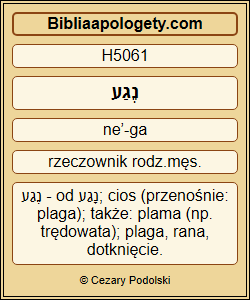 trądu H6883 trądu H6883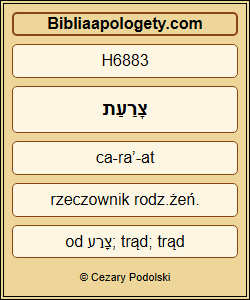 , którego H834 nie H3808 , którego H834 nie H3808 stać H5381 stać H5381 jego ręki H3027 jego ręki H3027 na jego oczyszczenie H2893 na jego oczyszczenie H2893 ”. ¶ (Kpl14_32 tłum. AI) ”. ¶ (Kpl14_32 tłum. AI) |
|||||||||||
| L03 | Kpl14_32 | To jest prawo dotyczące człowieka chorego na trąd, którego nie stać na ofiarę za oczyszczenie. (Kpl14_32 BT_4) | |||||||||||
| L04 | Kpl14_32 | To H2063 jest prawo H8451 dotyczące H413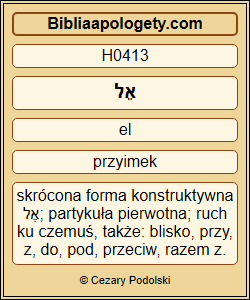 człowieka H120 człowieka H120 chorego H6883 na trąd H6879 chorego H6883 na trąd H6879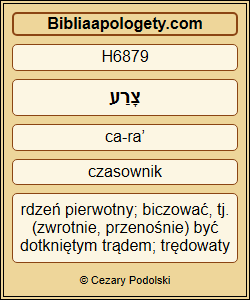 , którego nie stać H3808 na ofiarę H5381 H3027 za oczyszczenie H2893. (Kpl14_32 BT_4) , którego nie stać H3808 na ofiarę H5381 H3027 za oczyszczenie H2893. (Kpl14_32 BT_4) |
|||||||||||
| L05 | Kpl14_32 | zot | to·(Rat), | 'a·(Szer)- | bo | (Ne)·ga' | ca·(Ra)·'at; | 'a·(Szer) | lo- | tas·(Sig) | ja·(Do) | be·to·ho·ra·(To). | (Pe) |
| L06 | Kpl14_32 | זֹ֣את | תּוֹרַ֔ת | אֲשֶׁר־ | בּ֖וֹ | נֶ֣גַע | צָרָ֑עַת | אֲשֶׁ֛ר | לֹֽא־ | תַשִּׂ֥יג | יָד֖וֹ | בְּטָהֳרָתֽוֹ׃ | פ |
| L07 | Kpl14_32 | To | jest prawo | tego, który | ma | zmianę | trądu, | którego | nie | stać | jego ręki | na jego oczyszczenie. | ¶ |
| L08 | Kpl14_32 | זֹ֣את | תּוֹרַ֔ת | אֲשֶׁר־ | בּ֖/וֹ | נֶ֣גַע | צָרָ֑עַת | אֲשֶׁ֛ר | לֹֽא־ | תַשִּׂ֥יג | יָד֖/וֹ | בְּ/טָהֳרָתֽ/וֹ׃ | פ |
| L09 | Kpl14_32 | HPdxfsZaimek wskazujący, os. ?, ż., lp. | HNcfscRzecz. posp., ż., lp., stan konstrukcyjny | HTrPartykuła względna | HR/Sp3msPrzyim. + Sufiks zaimkowy, 3 os., m., lp. | HNcmscRzecz. posp., m., lp., stan konstrukcyjny | HNcfsaRzecz. posp., ż., lp., stan absolutny | HTrPartykuła względna | HTnPartykuła przecząca | HVhi3fsCzas. hifil, imperfektum, 3 os., ż., lp. | HNcbsc/Sp3msRzecz. posp., r. wspólny, lp., stan konstrukcyjny + Sufiks zaimkowy, 3 os., m., lp. | HR/Ncbsc/Sp3msPrzyim. + Rzecz. posp., r. wspólny, lp., stan konstrukcyjny + Sufiks zaimkowy, 3 os., m., lp. | MARK-PZnacznik podziału: petucha (akapit otwarty) |
| L10 | Kpl14_32 | zö´t | Tôrat | ´ášer- | Bô | neºga` | cäräº`at | ´ášer | lö|´- | taSSîg | yädô | Bü†ohórätô | P |
| L11 | Kpl14_32 | H2063 |
H8451 |
H0834 |
H0000  |
H5061 |
H6883 |
H0834 |
H3808 |
H5381 |
H3027 |
H2893 |
|
| L12 | Kpl14_32 | likewise | This [is] the law | whom | [of him] in whom [is] the plague | of leprosy | whose | not | is not able to get | whose hand | [that which pertaineth] to his cleansing | ||
| L13 | Kpl14_32 | zot | to·Rat, | a·Sher- | bo | Ne·ga' | tza·Ra·'at; | 'a·Sher | lo- | tas·Sig | ya·Do | be·to·ho·ra·To. | Peh |
| L14 | Kpl14_32 | זֹאת | תּוֹרָה | אֲשֶׁר | נֶגַע | צָרַעַת | אֲשֶׁר | לֹא | נָשַׂג | יָד | טׇהֳרָה | ||
| L15 | Kpl14_32 | (Zot) | to·(Ra) | 'a·(Szer) | (Ne)·ga' | ca·(Ra)·'at | 'a·(Szer) | (Lo) | na·(Sag) | (Jad) | to·ho·(Ra) | ||
| L16 | Kpl14_32 | zō(’)ṯ | tôrā(h) | ’ᵃ̆šer | nég̱a‘ | ṣārá‘aṯ | ’ᵃ̆šer | lō(’) | nāśag̱ | jāḏ | ṭohᵒ̆rā(h) | ||
| L17 | Kpl14_32 | zō’t | tôrāh | ’ăšer | nega‘ | ṣāra‘at | ’ăšer | lō’ | nāśag | jād | ṭohŏrāh | ||
| L18 | Kpl14_32 | This [is] the law [of him] in whom [is] the plague of leprosy, whose hand is not able to get [that which pertaineth] to his cleansing. (Kpl14_32 KJV) | |||||||||||
| L19 | Kpl14_32 | 32 This is the law <08451> of him in whom is the plague <05061> of leprosy <06883>, whose hand <03027> is not able to get <05381> (08686) that which pertaineth to his cleansing <02893>. (Kpl14_32 KJV) | |||||||||||
| L20 | Kpl14_32 | 82/603 | 20/216 | 881/5499 | 907/6521 | 51/78 | 24/35 | 882/5499 | 528/5164 | 12/50 | 234/1608 | 9/15 | |
| L21 | Kpl14_32 | Kpl14_32_1 | Kpl14_32_2 | Kpl14_32_3 | Kpl14_32_4 | Kpl14_32_5 | Kpl14_32_6 | Kpl14_32_7 | Kpl14_32_8 | Kpl14_32_9 | Kpl14_32_10 | Kpl14_32_11 | Kpl14_32_12 |